
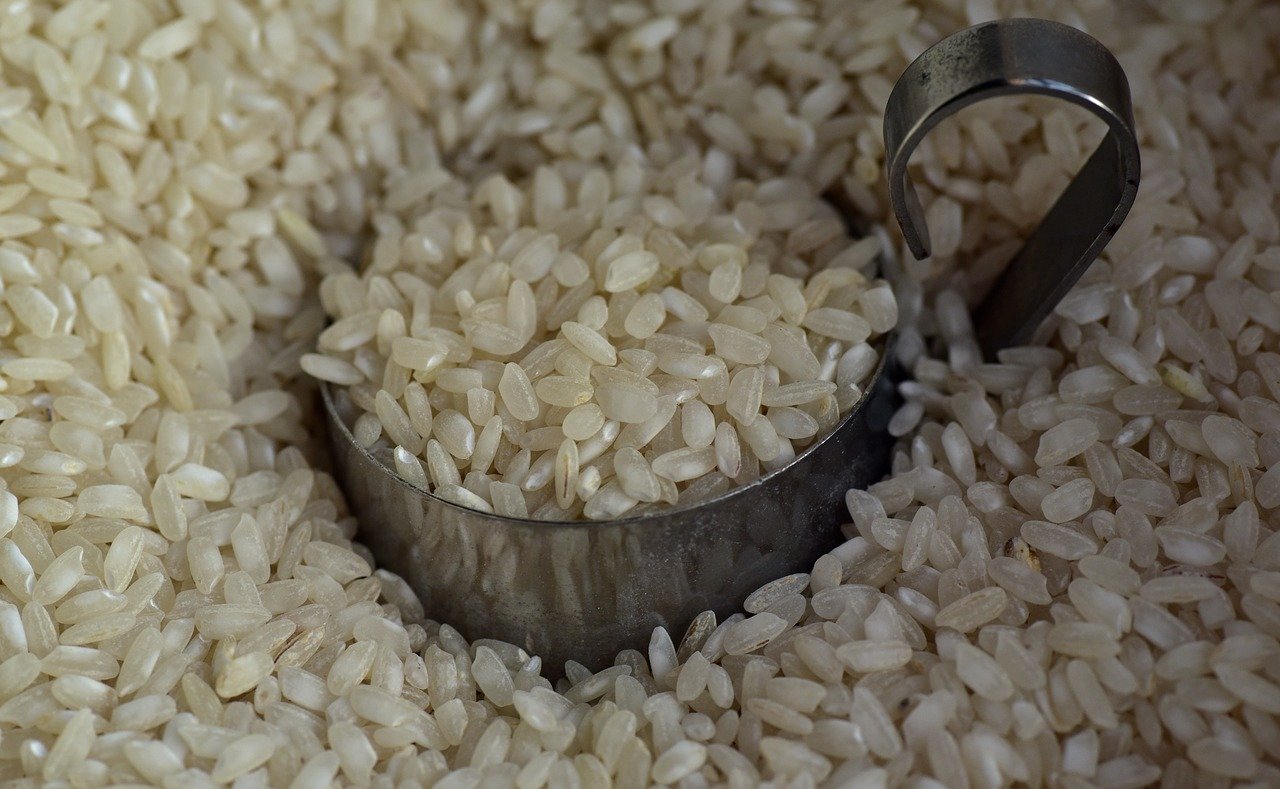
What’s the Deal with Rice?
One of the things that people on the ketogenic diet as well as those who eat clean often question is in regards to the health benefits of rice.
In a way, rice has been demonized.
Only because it’s an intensely dense source of carbohydrates and calories.
When we get down to brass tacks, rice is actually one of the more beneficial foods on the planet.
And what I mean by that is it’s easy-to-grow, it’s nutrient dense, and it’s affordable.
But, there’s still confusion on rice.
And some of it is justified.
Like, which one is better, white or brown?
How much is too much?
And can you get poisoned by eating too much rice (rice is known to contain arsenic)?
I’m going to write a novel in defense of rice, but I would like to highlight what is good about rice.
And hey, I don’t think it’d be the worst thing in the world to have 25-50 lbs of it in storage.
Why?
Well, I’m writing this in August of 2020 and we’re only a few months after the massive runs on the grocery store that started as a result of the coronavirus pandemic. Rice, being a supremely dense source of calories, is a great food to have in storage so you can survive in case things ever go sideways.
Ok, now let’s get into what makes rice not the worst thing ever.
The Health Benefits of Rice, Are there Any?
So, if you’re going to eat rice for its nutritional benefits, then you’re going to want to eat brown rice, or rice that has not been stripped of its outer shell.
White rice is simply any kind of rice that has been denatured (I’ll explain why, later).
The outer shell of brown rice, and many other kinds of “multicolored” rice is where you’ll find most of the nutrients that provide health benefits.
However, brown rice, or multicolored rice, really isn’t that much healthier than white rice.
Here’s a handy little chart that gives you a breakdown of the different nutrient profiles.

You’ll notice that there’s a white rice that’s “enriched”. Manufacturers enrich rice knowing that the loss of nutrients isn’t ideal, so they add nutrients back in. Not the worst thing in the world but not the best either when it’d be better to get those nutrients from the plant itself.
From there, we have to talk about how rice affects your glycemic index (GI). Your glycemic index is the measurement of your blood sugar, so the higher a number is, the worse it is for you.
Brown rice has a lower GI (55) and white rice has a GI of (64). This basically means that white rice is going to spike your blood sugar more so than brown rice.
So, isn’t that a bad thing?
It can be, especially if you eat too much.
Here’s what Healthline says about that…
“Studies have shown that people who regularly eat large amounts of white rice have a higher risk of metabolic syndrome, especially Asian adults.
But while studies have noticed a connection between white rice consumption and diabetes, the link between white rice and heart disease is still unclear.
Meanwhile, brown rice consumption has been associated with a lower risk of heart disease.
For instance, adults that consume the most amount of whole grains may have an up to 21% lower risk of heart disease than adults eating the least amount.
Brown rice also contains lignans, a plant compound that has been shown to help lower blood pressure, reduce the amount of fat in your blood and reduce arterial stiffness.”
So what does that mean?
Well, if you ate too much rice (that’s the operational term here, too much) then it could predispose you to type 2 diabetes, weight gain and the possibility of succumbing to moderate arsenic poisoning.
It just so happens that certain areas of the world have higher-levels of arsenic in the soil.
As the rice grows in the soil, it absorbs the arsenic, and then in turn you can eat it and become affected.
However, not all rice is equal. Jasmine and basmati rice have lower amounts of arsenic, rice grown in the Himalayan region of the world has lower levels, and so too does white rice. The outer shell of rice is where most of the arsenic ends up, and so when it’s removed you absorb less.
Some Other Benefits of Rice
So right now, the verdict isn’t looking good for rice, does it?
Well, let’s talk about some of the merits of rice.
When it comes to white rice, it’s one of the best things you can eat from a digestion standpoint. So if you have some kind of health issue that makes digestion difficult, this could be a gamechanger.
Brown rice is a bit different as the outer shell is tougher to digest as it’s a dense fiber that can promote painful digestion.
In addition to that, even though it raises your glycemic index, rice can help to give anyone and everyone some clean energy too.
This is true even if you’re on a ketogenic diet. Of course, if you’re on a ketogenic diet, you can’t eat too much of it or else it’ll throw yourself out of ketosis. To know if you’re jeopardizing your levels of ketosis you’d need to weigh your food to know how much you’re consuming.
And if you’re not on a ketogenic diet, then rice can definitely be helpful.
Especially if you’re trying to perform well athletically.
I think rice is fine to have in your diet.
I would measure how much you’re consuming though, because you can get into trouble with it by eating too much.
But, I don’t think it’s OK to have a diet that consists mostly of rice. The only time I’d recommend that is in a survival situation.
Talk soon,
Dr. Wiggy
Related Posts

Why We Spent BIG $$$ on This Breast Imaging Machine
One of the most amazing things about the 20th and 21st centuries is that technology lets us see inside the human body.For millennia, if you were ill, there was no way for a person’s insides to be exposed to find out what was going on.Tha...
Read More
These Healthy Foods Might Make Your Stomach Hurt - BAD
Spinach, almonds and sweet potatoes usually land firmly in the “healthy food” category.
For most people, that’s reasonable advice.But not everyone can deal with them…
Especially for someone with Crohn’s disease or ulcerative colitis, ne...
Read More
It’s Time to Talk about Breast Cancer (And How We Can Help)
As National Breast Cancer Awareness Month is rapidly approaching…And as we recently invested heavily in some new imaging equipment to help women battle this pernicious disease, I want to focus on why breast cancer has become one of those...
Read More